
Eight competencies employers value
Career & Self-Development
Using growing knowledge, skills and relationships to make informed career decisions and contribute effectively in academic and professional settings.
How skills are assessed
Students complete the assessment before and after their experience. Each competency is explored from three angles.
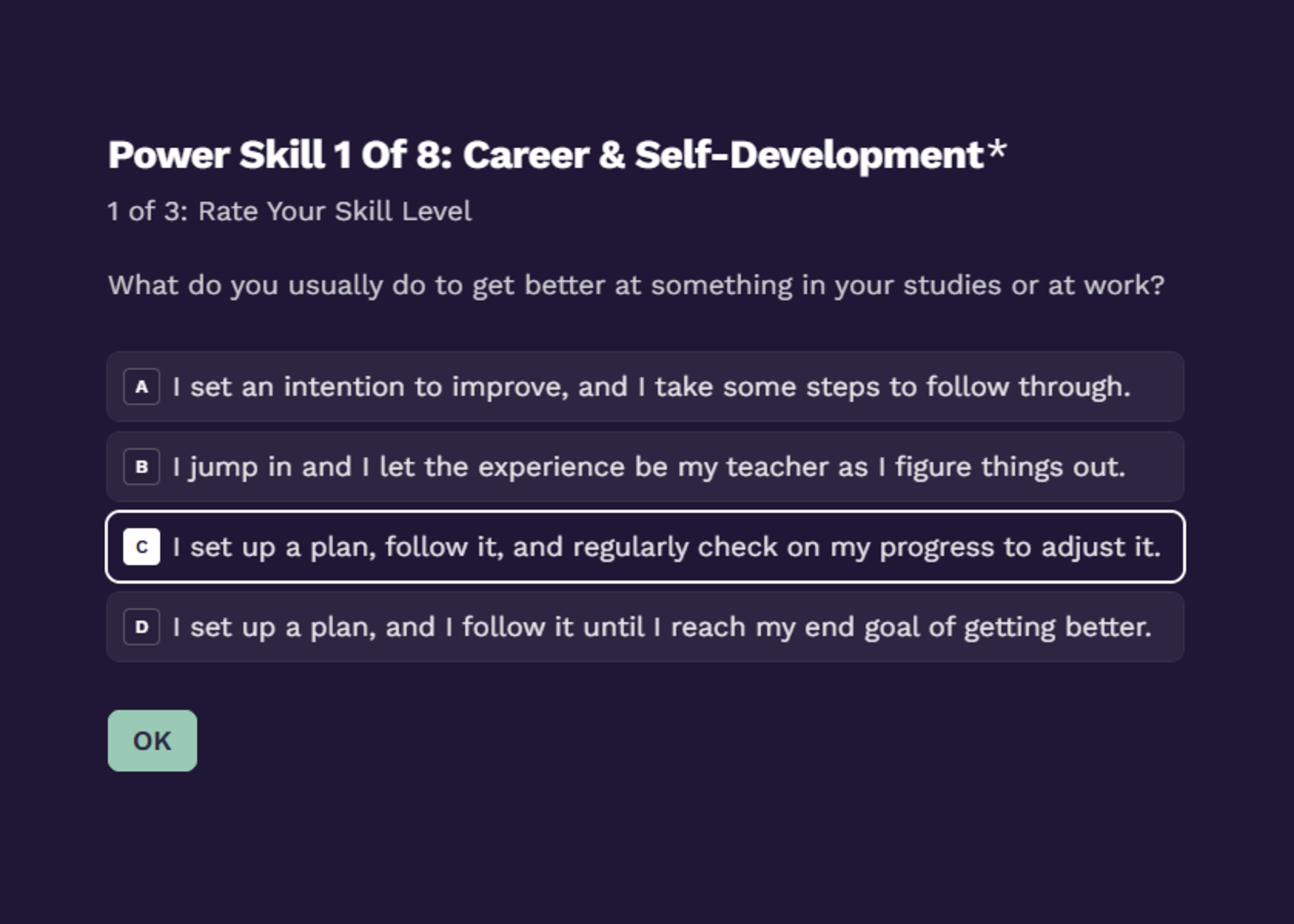
1Typical behavior
Behavioral questions explore how students commonly approach situations.
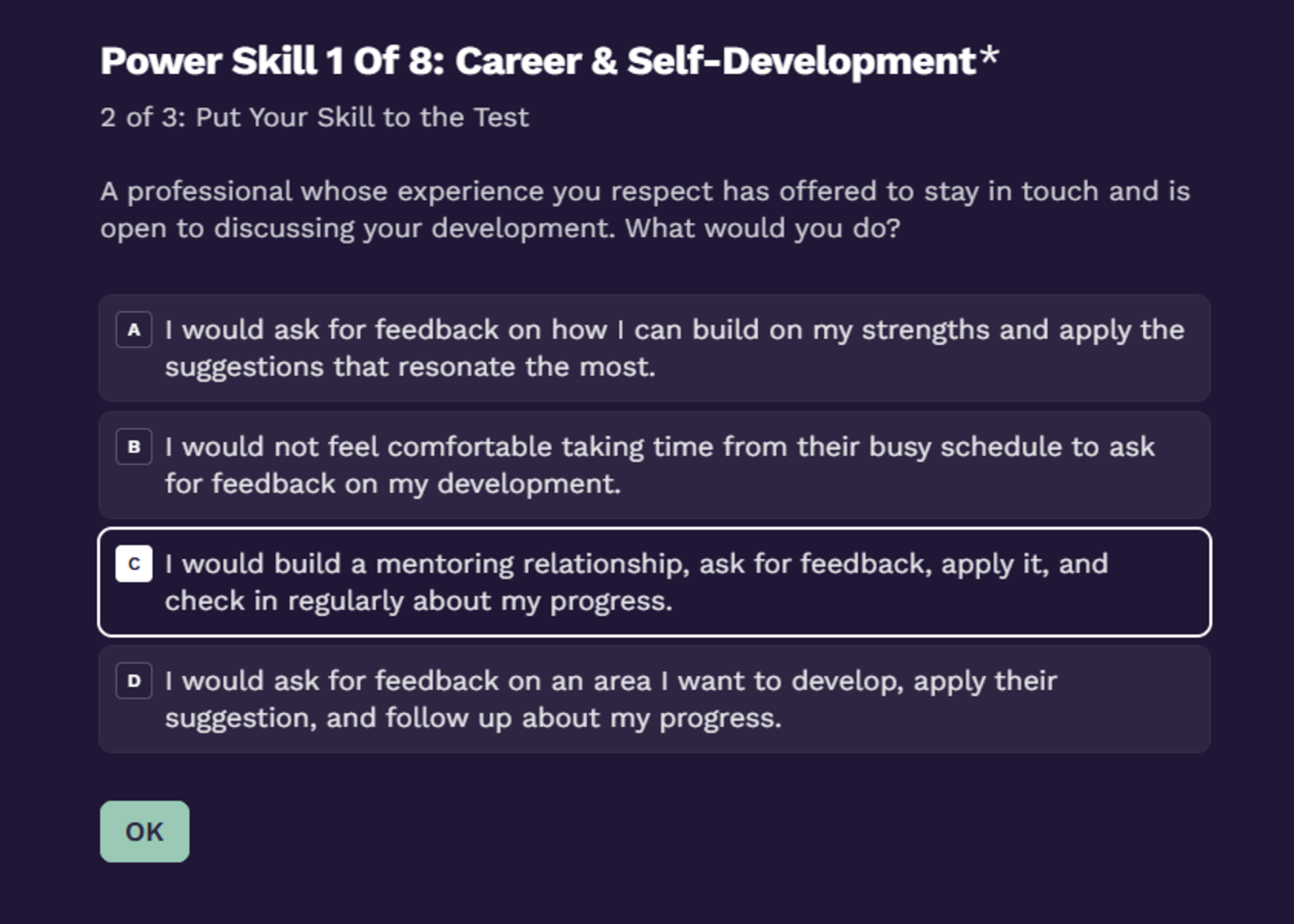
2Applied judgment
Scenario-based questions mimic realistic academic, workplace or community situations.
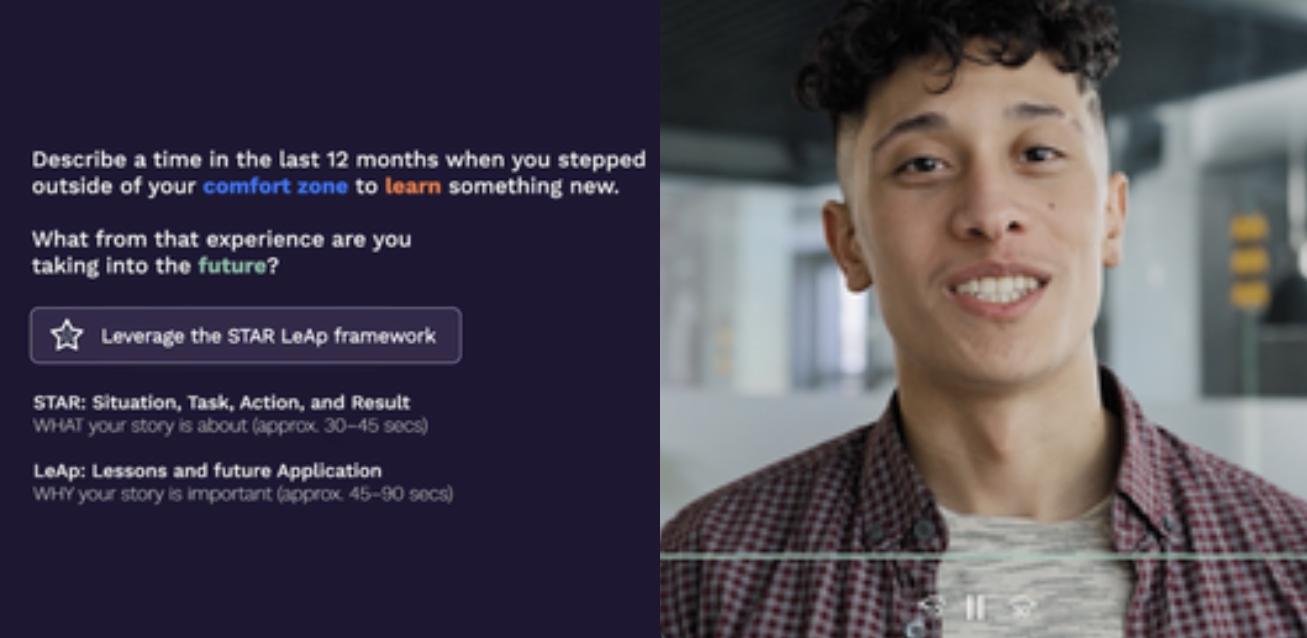
3Reflection & articulation
Students draw on real experiences and practice communicating what they learned.
Helping students articulate what they learned
CulturaGo introduces the STAR-LEAP framework to help students turn experience into evidence. They describe both WHAT they did and WHY it matters for their career.
Developing AI-enabled qualitative analysis with The Ohio State University
CulturaGo and The Ohio State University’s Translational Data Analytics Institute are developing and validating rubric-based, AI-supported analysis of students’ open-ended responses, evaluating evidence, reflection and articulation.
- Step 1Student response
- Step 2Human-defined rubric
- Step 3AI-supported analysis
- Step 4Evaluation against human judgment
Evidence students can use. Insight institutions can act on.
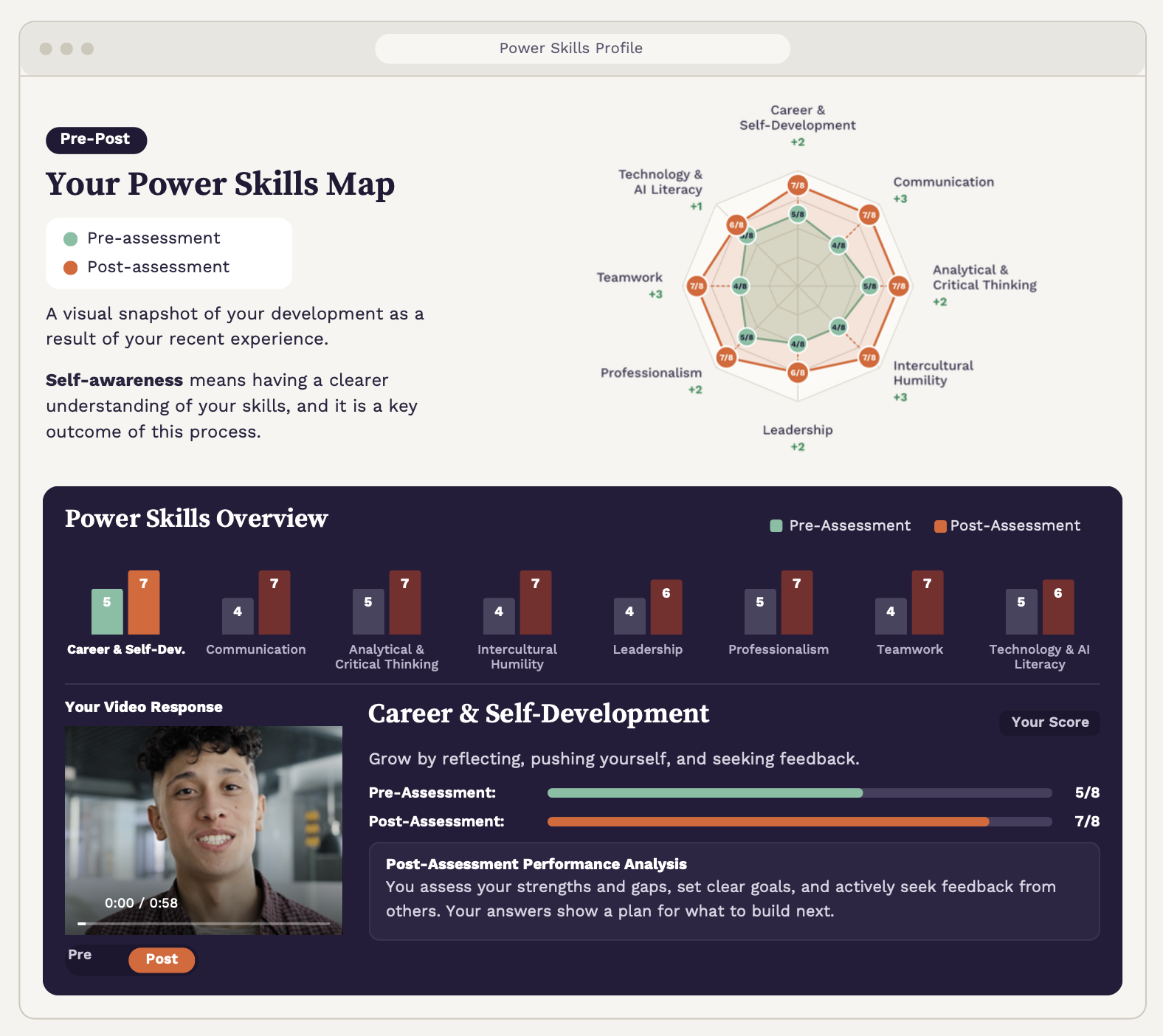
Power Skills Profile shown with a demo student.
Built through established assessment-design methods
- 2023
Foundational framework
Initial competency framework established.
- 2024
Early instrument development
First question sets drafted and piloted.
- Spring 2025
Version 1.0 launches
First version administered with partner institutions.
- 2025–26
Analysis and expert review
Quantitative analysis, partner feedback and external expert review.
- Fall 2026
Version 2.0 launches
Rebuilt with competency-based design methods and rubric-led items.
- Next
Formal validation
Content-validity, usability and reliability studies.
Research, design and external expertise
With thanks to the professionals who have contributed to the Power Skills Assessment, across both Version 1.0 and Version 2.0.

Dr. Marcello Francioni
Head of Education, CulturaGo
Assessment design and item authoring
Dr. Elsa Maxwell-Bourdon
Former Director of Academic Partnerships, CulturaGo
Assessment design and item authoring
Dr. Benjamin Selznick
Associate Professor and Advisor, Postsecondary Analysis and Leadership, James Madison University
Expert assessment review
Judith Anderson
Founder, 5959 Solutions Inc.; former Director of Career Readiness, U of Minnesota
Career-readiness and item-design review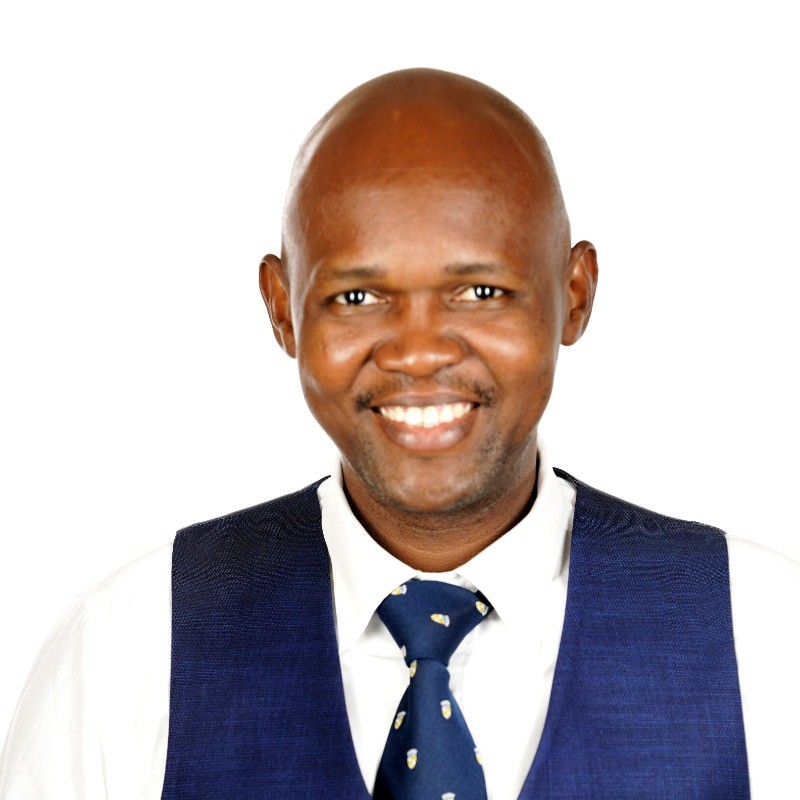
Barnabas Suva
PhD Candidate, Strategic Leadership Studies, James Madison University
Expert assessment review
Dr. Richard Hall
Senior Assessment Specialist and Adjunct Lecturer, School for International Training
Quantitative data analysis
Dr. Kyle Nickodem
Director, Research Methodology Consulting Center, University of Minnesota
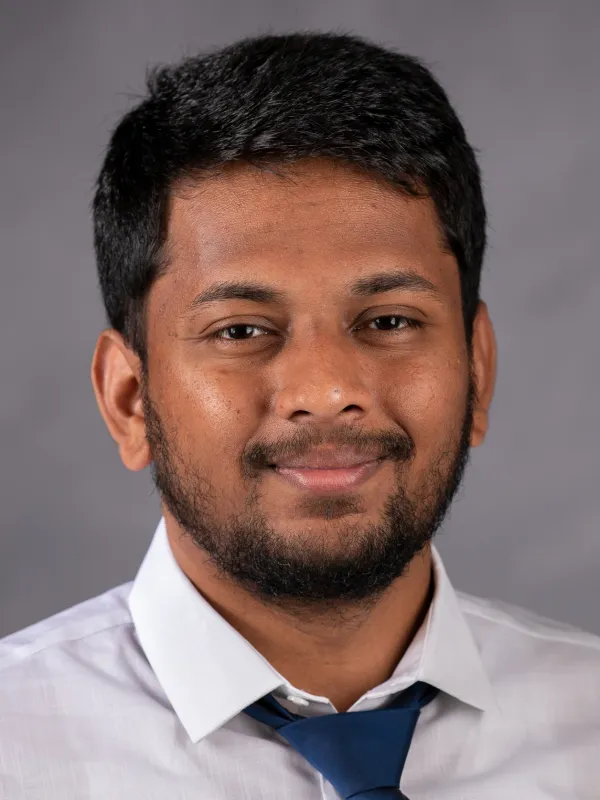
Methodology and validation reviewDr. Krishna Chaitanya Rao
Program Director, Translational Data Analytics Institute, The Ohio State University
AI-enabled qualitative data analysis
Cynthia Engel
Director, Career Design Center, Oregon State University–Cascades
Competency definition review
Dr. Maureen Manning
Founder & Managing Director, The Global Nexus Collective
Academic Advisory Board
Dr. W. Patrick Bingham
Director, RAISE Center, Wake Forest University
Academic Advisory Board
Dr. Mariam Raza
Director, International Recruitment, University of Guelph
Academic Advisory Board